Android

How to build a salad that actually keeps you full
Most salads leave you hungry by four o'clock. Here is the five-part formula behind every Satvik bowl, and the science behind each part, so you can use it at home too.
A bowl of cucumber, lettuce and a squeeze of lemon looks virtuous. By four o'clock you are hungry again, and the biscuit tin wins.
A salad becomes a meal when it is built like a balanced plate, not a garnish. Every bowl we make at Satvik Salaad follows the same five-part formula. Here it is, with the reason behind each part, so you can use it in your own kitchen too.
Start with the plate, not the leaves
India's own dietary guidelines are a good place to begin. ICMR-NIN's Dietary Guidelines for Indians (2024) ask adults to eat at least 400 g of vegetables a day, with fresh vegetables and green leafy vegetables in every meal, and they name raw salad as one of the ways to get there.
The same guidelines ask us to combine whole grains, pulses and millets, and to get our fats from a variety of nuts and oilseeds. A well-built salad bowl can do all of that in one sitting.
The five-part formula
1. A big base of vegetables, in at least three colours
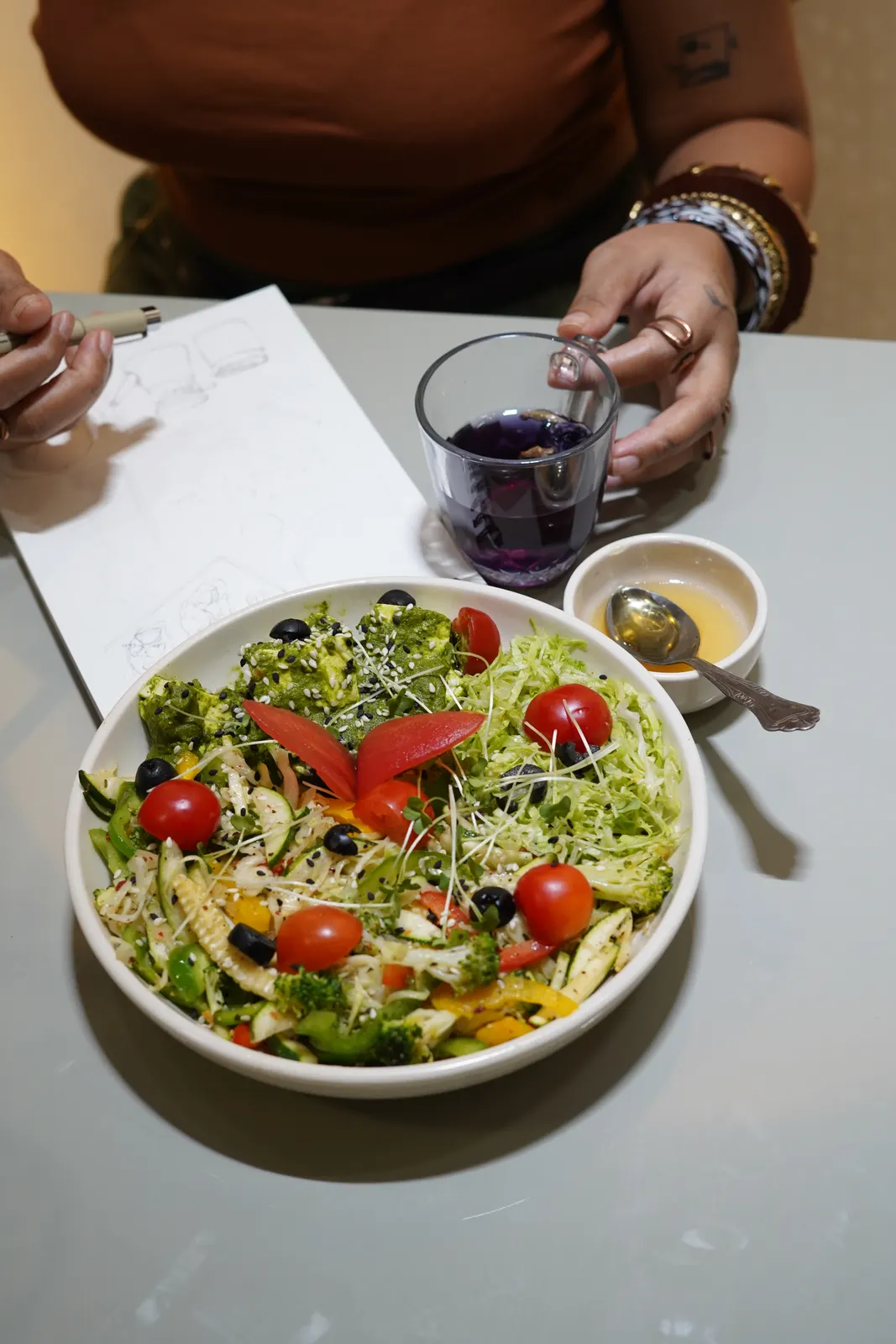
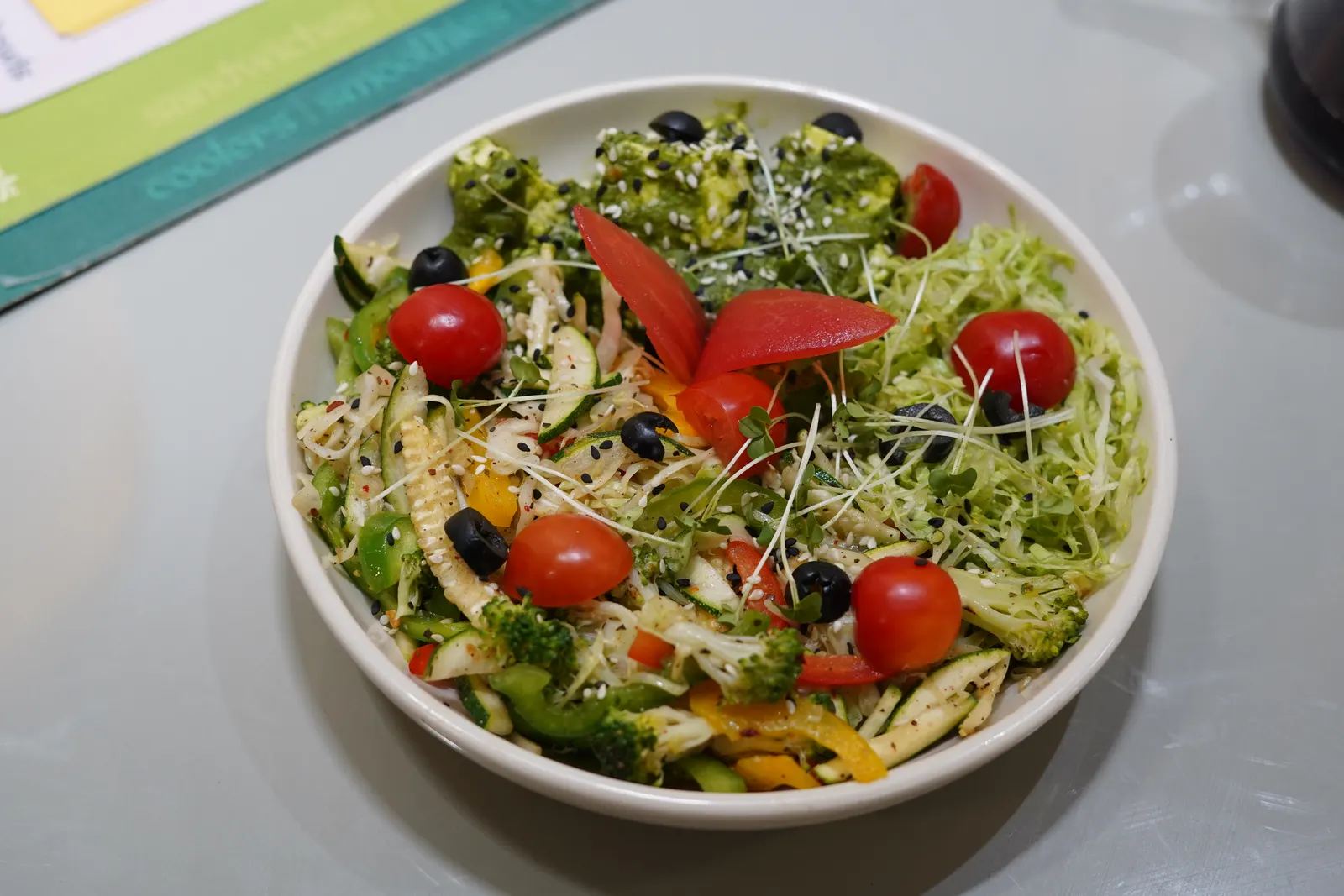
This is the volume of the bowl: leafy greens, cucumber, cabbage, carrot, peppers, tomatoes, broccoli and corn. Different colours bring different nutrients, and plenty of vegetables bring fibre, which slows digestion and keeps you full for longer.
Mix raw and cooked. Lightly steamed broccoli, roasted pumpkin or blanched beans make a salad warmer and easier on the stomach, especially in the monsoon.
2. A real portion of protein
Protein is what turns a side salad into lunch. Sprouted moong, kala chana, rajma, chickpeas, paneer, tofu, edamame or a hung-curd dressing all work. Our Chatpata Chana Bowl gets 18 g of protein from black chana, and the Edamame Crunch Bowl reaches 19 g with edamame and peanuts.
How much protein you need, and how to get it as a vegetarian, has its own post: Vegetarian protein: how much you need and where to get it.
3. A small serving of whole grains or millets
A few spoonfuls of brown rice, quinoa, jowar, bajra or whole-wheat pasta give steady energy for the afternoon. Keep it to about a quarter of the bowl, so vegetables and protein still lead.
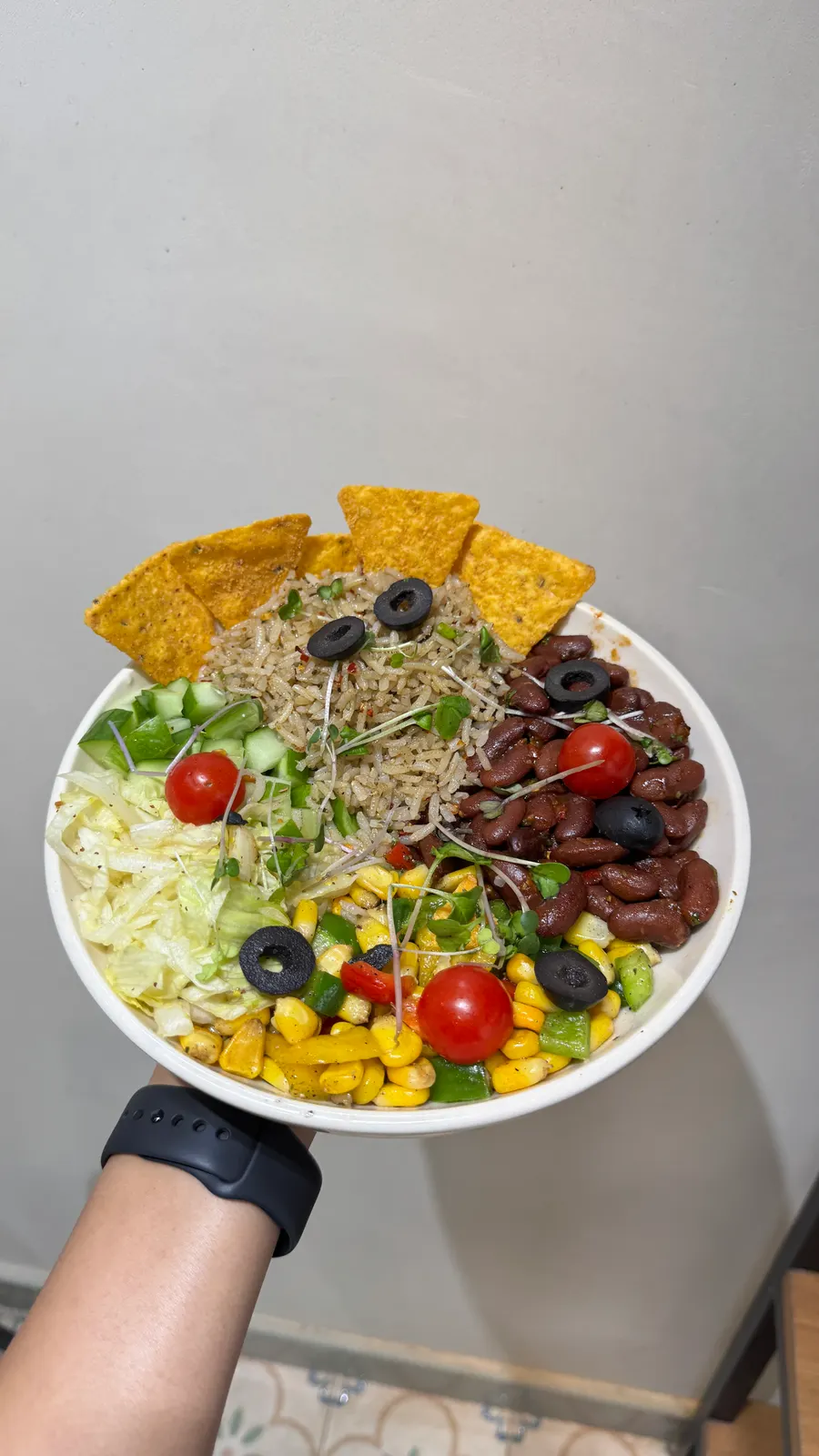
Pairing a grain with a pulse has another benefit: ICMR-NIN notes that combining cereals and pulses improves the quality of the protein in a meal. That is why our Mexican Burrito Bowl pairs rajma with brown rice.
4. A little good fat
Fat-free dressings sound healthy, but they make a salad less nourishing. Many nutrients in vegetables, such as beta-carotene from carrots and lycopene from tomatoes, need fat to be absorbed. In a study in the American Journal of Clinical Nutrition, people who ate a salad with fat-free dressing absorbed almost none of these carotenoids. With a reduced-fat dressing they absorbed more, and with a full-fat dressing more still.
You don't need much: a spoon of cold-pressed oil in the dressing, a sprinkle of roasted peanuts, walnuts, pumpkin or sunflower seeds, or a few slices of avocado. Moderation still applies, as the guidelines advise using oils sparingly.
5. Flavour that does some work
Lemon juice, herbs, roasted jeera, chaat masala, raw mango and pomegranate make a salad something you want to eat every day. Lemon earns its place twice over: vitamin C is the most effective known helper for absorbing the iron in plant foods such as greens, sprouts and pulses.
Go easy on salt and on bottled sauces. ICMR-NIN advises no more than 5 g of salt a day, and creamy, mayonnaise-heavy dressings can add more calories than everything else in the bowl.
Five mistakes that leave you hungry
Only leaves and cucumber. Plenty of water and crunch, very little to keep you going.
No protein. Add a pulse, sprouts, paneer, tofu or curd.
A fat-free dressing. You miss vitamins your body could have absorbed.
A sauce-heavy dressing. Mayonnaise and sweet sauces add salt, sugar and calories fast.
Eating it after the meal. A salad works best at the start. We explain why in Eat your salad first.
How our bowls follow the formula
Every bowl on our menu is designed around these five parts, and the menu lists the calories and protein in each. A few examples:
Mexican Burrito Bowl: rajma and brown rice with bell peppers, cucumber, lettuce, corn and cherry tomatoes. 410 kcal, 12 g protein.
Quinoa Nourish Bowl: quinoa and lentils with eight vegetables, from broccoli to baby corn. 290 kcal, 12 g protein.
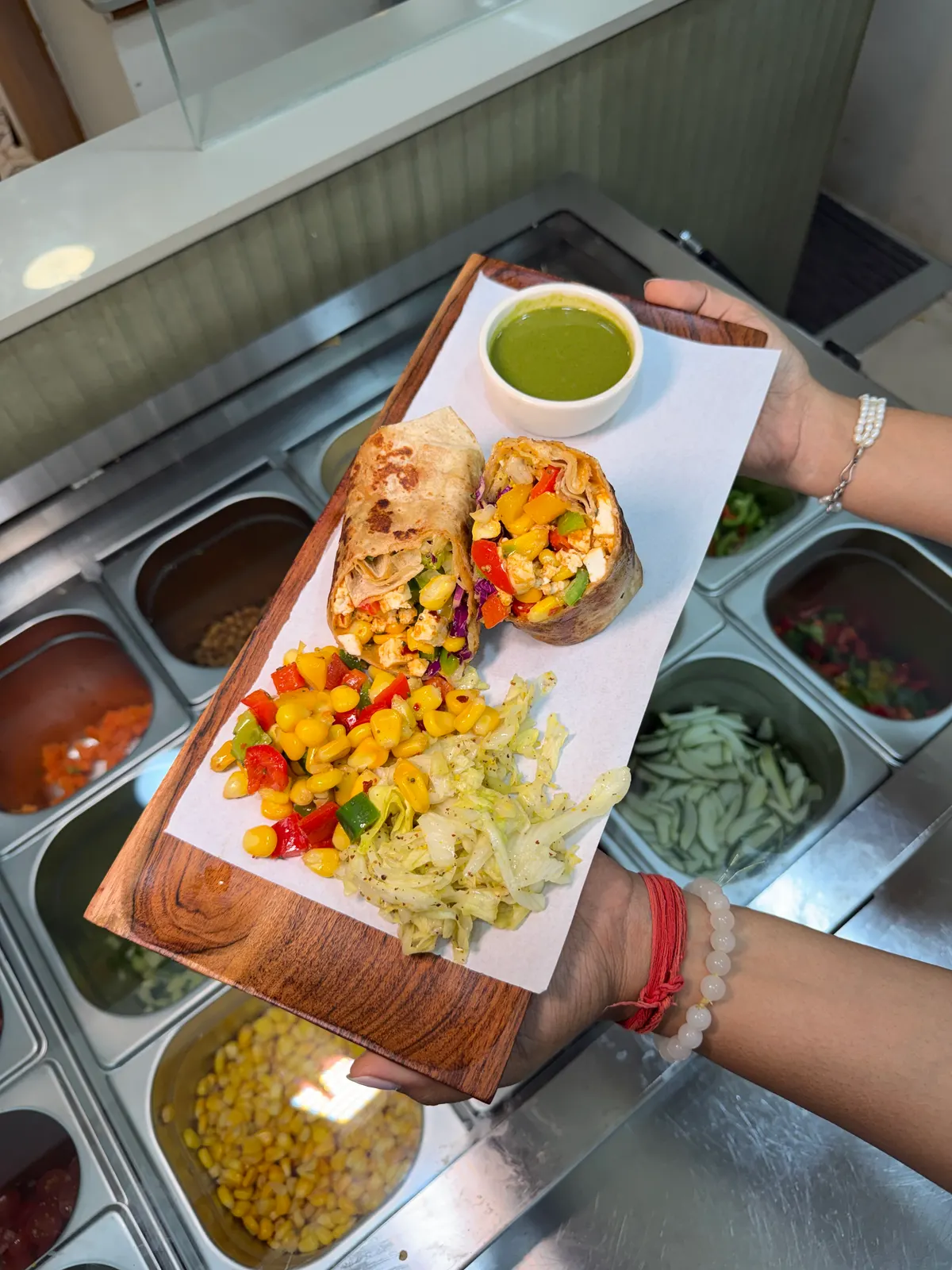
Tandoori Paneer Tikka Bowl: tandoori paneer over cabbage, peppers, zucchini, broccoli and more. 390 kcal, 22 g protein.
If you would rather not chop every day, our Weekly Salad plan brings six bowls to your door across Ahmedabad, for lunch or dinner. And our dietitian can plan portions around your goals in a diet consultation.
This article is general information, not medical advice. If you have a health condition, are pregnant, or take regular medication, speak to your doctor or dietitian before changing your diet.