Android
Vegetarian protein: how much you need and where to get it
How much protein an Indian adult needs, how to work out your own number, and how to reach it on a vegetarian diet with everyday food instead of powders.
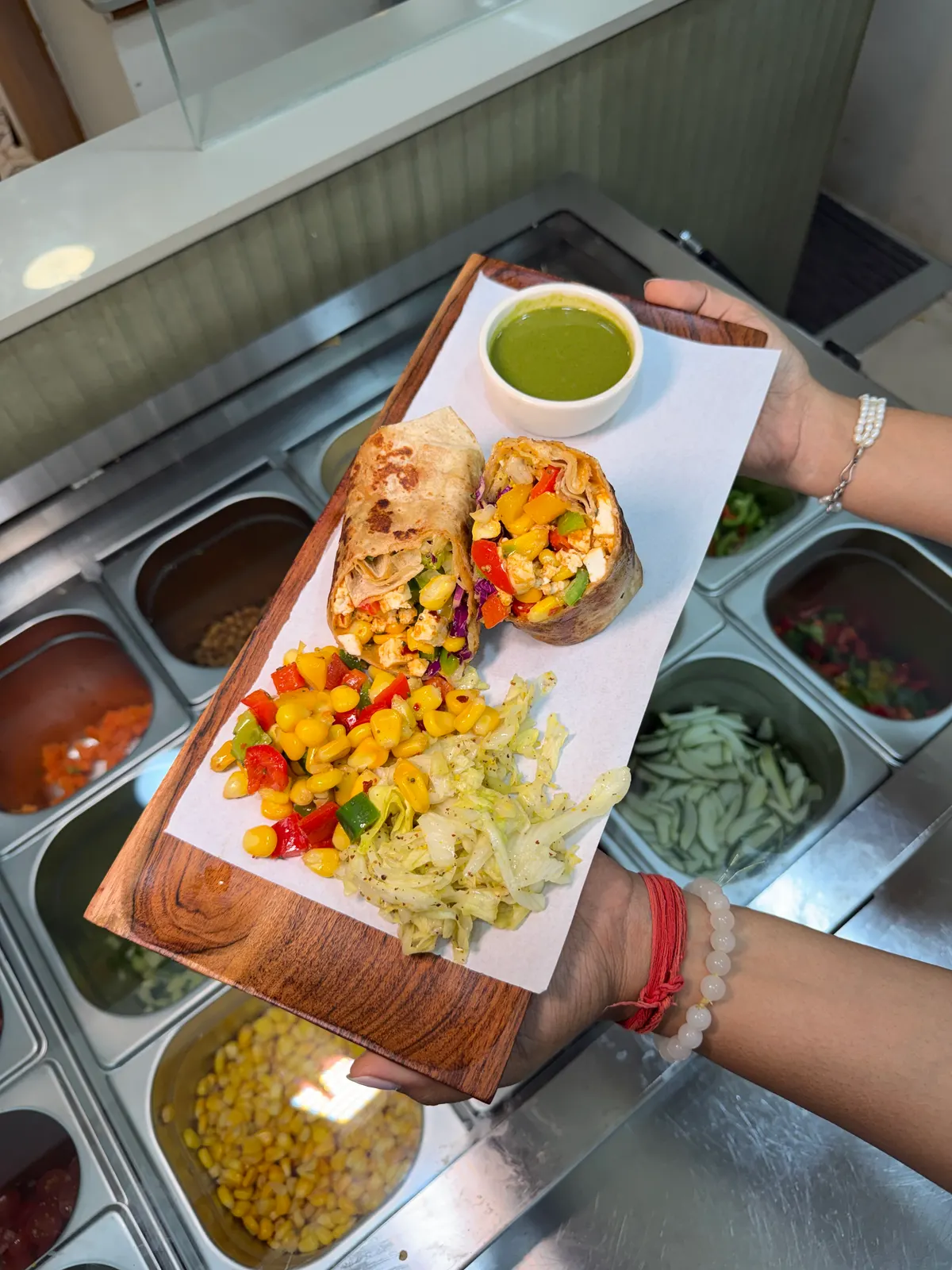
“Can I get enough protein as a vegetarian?” It is one of the questions we hear most at our café. The short answer is yes. It takes a little planning, not powders. Here is what the science says, and how to do it with everyday Indian food.
How much protein do you need?
ICMR's National Institute of Nutrition recommends 0.83 g of protein per kilogram of body weight a day for healthy adults. For its reference adults, that works out to about 54 g a day for a 65 kg man and about 46 g for a 55 kg woman.
To find your own number, multiply your weight in kilograms by 0.83. At 70 kg, that is about 58 g a day.
Two notes from the same report. If most of your protein comes from cereals alone, which carry lower-quality protein, the requirement rises to 1 g per kilogram. And needs change in pregnancy and breastfeeding, and can differ with age, heavy training or kidney disease, so check with your doctor or dietitian in those cases.
Quality matters as much as quantity
Protein is built from amino acids, and nine of them have to come from food. Cereals run short of some of these and pulses of others, so eaten together they cover each other's gaps.
That is why ICMR-NIN's Dietary Guidelines for Indians say that combining cereals with pulses in a ratio of about 3:1 improves the quality of protein in a meal, and that vegetarians can meet their quality protein needs with recommended amounts of pulses, beans, peas and milk or curd. Dal-chawal, khichdi, rajma-rice and idli-sambar have been doing this for generations.
The best vegetarian sources
Dals, whole pulses and beans: moong, masoor, chana, rajma and lobia. Most dry pulses carry roughly 17–24 g of protein per 100 g, so a katori of cooked dal made from about 30 g of dry dal gives roughly 5–7 g.
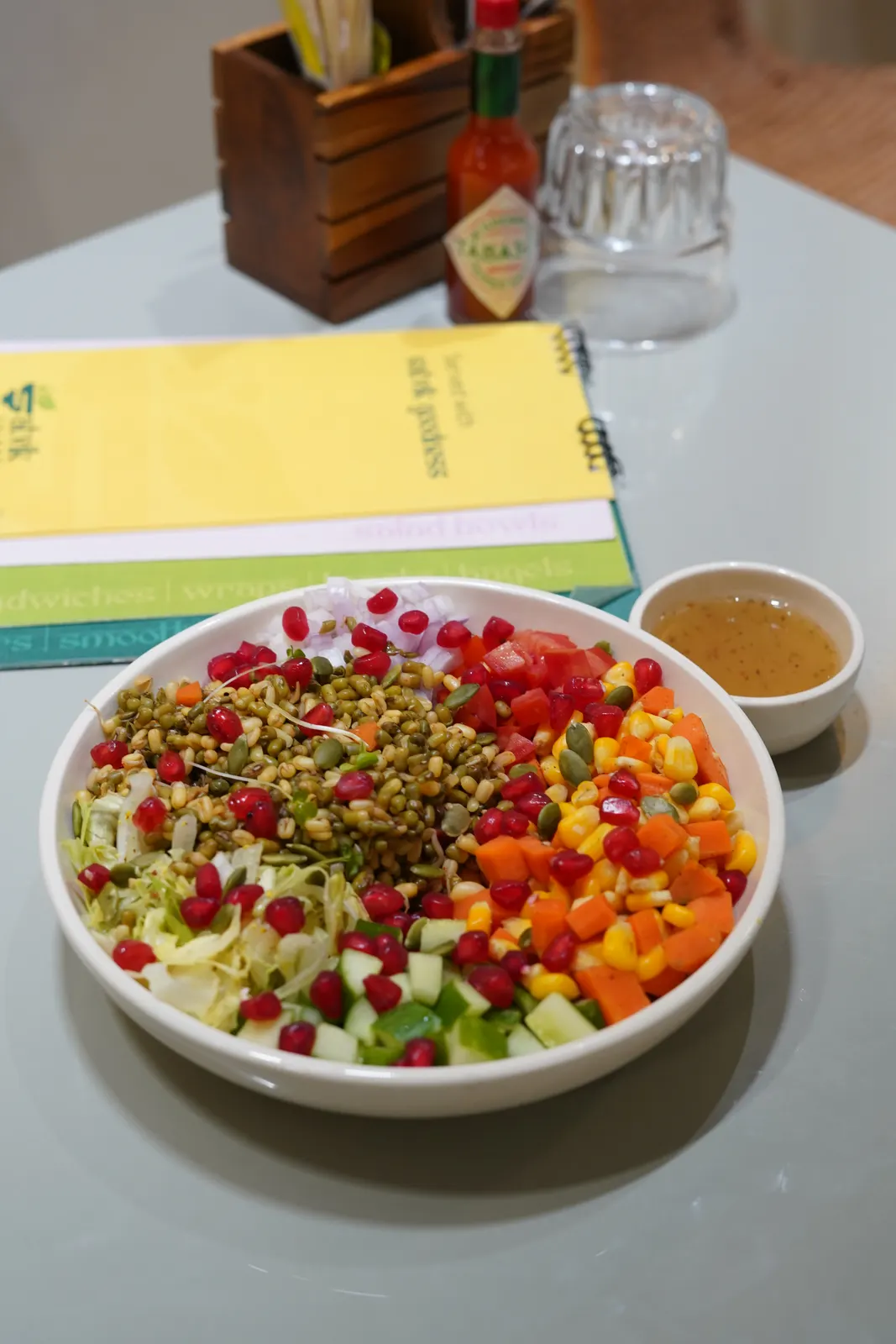
Sprouts, roasted chana and sattu: sprouting makes pulses easier to digest, and roasted chana and sattu make easy snacks. More in our post on sprouts and how to eat them safely.
Soya, tofu and edamame: soybeans are the richest pulse in protein, with roughly one and a half to two times as much as most others.
Milk, curd, paneer and chaas: good protein with calcium as a bonus. Hung curd makes an excellent salad dressing.
Peanuts, seeds and nuts: peanuts, pumpkin seeds and sunflower seeds add protein and good fats. A small handful goes a long way.
Whole grains and millets: they add up across the day, because we eat them in larger amounts.
Spread it across the day
It is easier to reach your number with some protein at every meal than with one big serving at dinner.
Breakfast: moong dal or besan chilla, sprouts stirred into poha, or curd with your paratha.
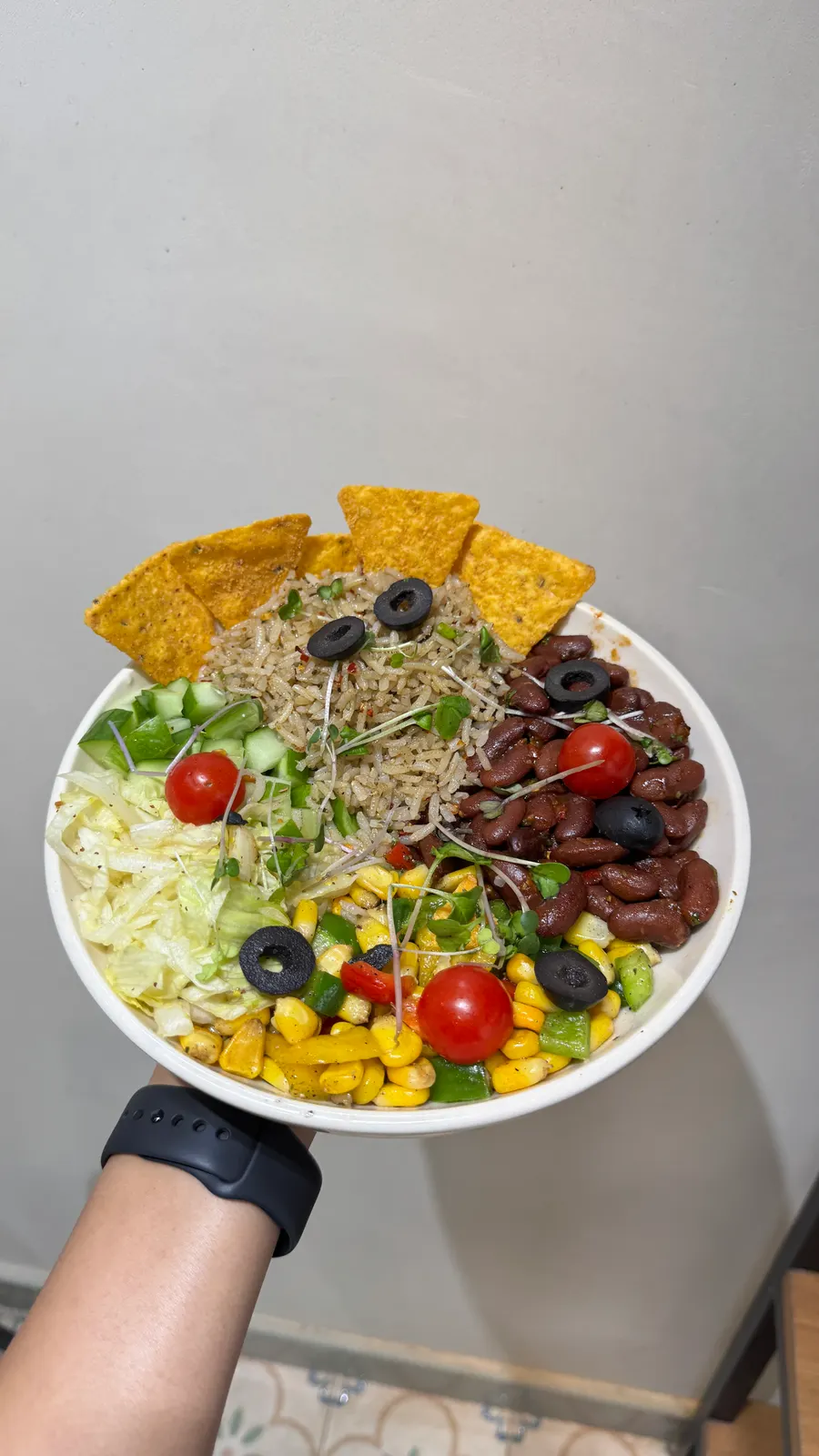
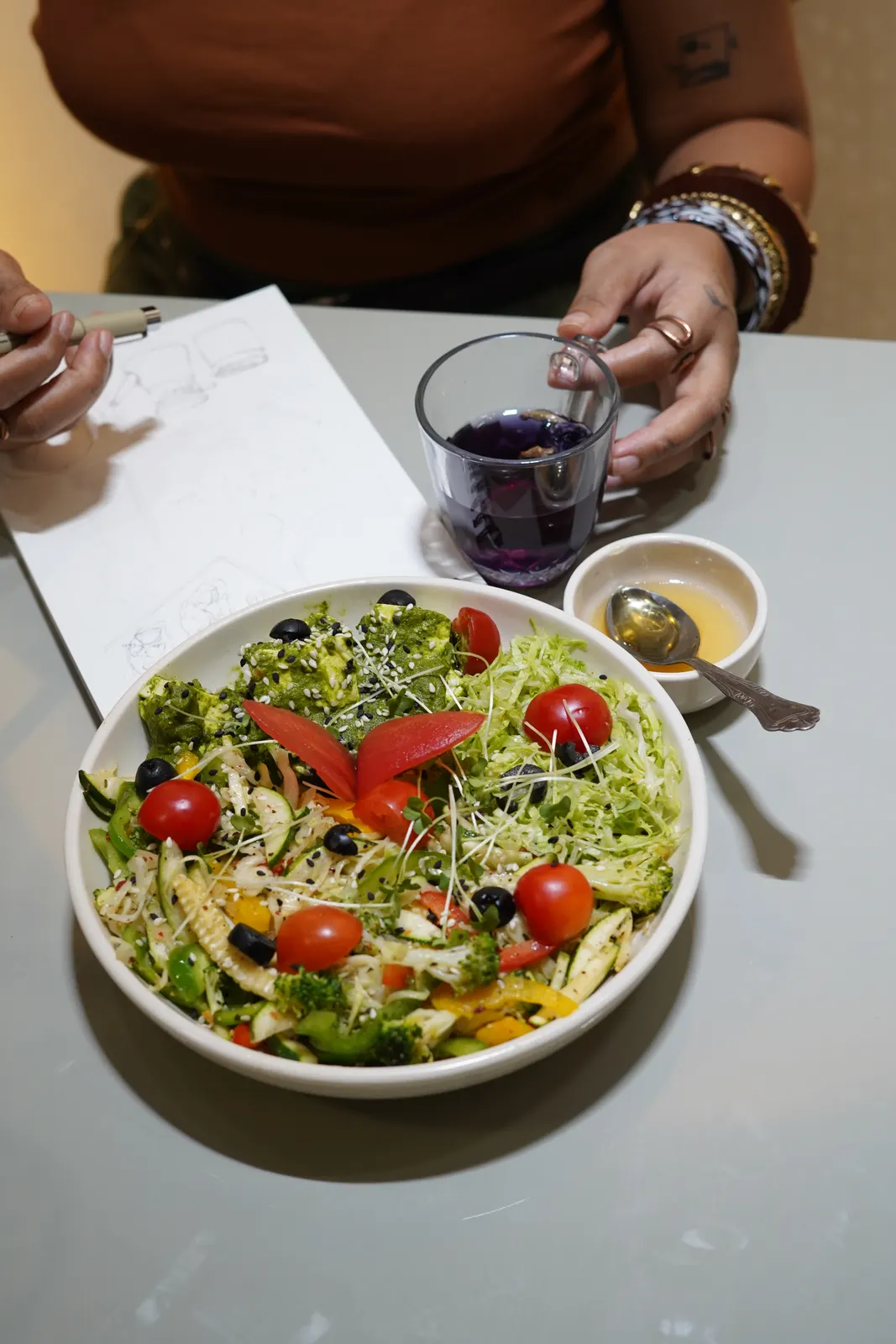
Lunch: a salad bowl with a pulse or paneer at its centre, or dal and sabzi with roti.
Evening: roasted chana, a handful of peanuts, or a glass of sattu.
Dinner: paneer or tofu with vegetables, or khichdi with curd.
Do you need protein powder?
For most people, no. ICMR-NIN's 2024 guidelines advise getting good-quality protein from the right combination of foods and avoiding protein supplements for building muscle. They note that most athletes can get the protein they need from well-chosen food, that protein powders are unnecessary for a normal healthy life, and that using excess protein supplements for long periods can affect health.
Bowls that do the work for you
Every bowl on our menu lists its protein. Some of the highest:
Tandoori Paneer Tikka Bowl: 22 g protein, 390 kcal.
Edamame Crunch Bowl: 19 g protein, 425 kcal.
Chatpata Chana Bowl: 18 g protein, 280 kcal.
Creamy Hummus Bowl: 18 g protein, 430 kcal, with hummus, pita and three falafel.
For a week of protein-forward bowls, see our High-Protein / Disease-Friendly Salad plan, or book a diet consultation for a plan built around your weight, routine and health.
This article is general information, not medical advice. If you have a health condition, are pregnant, or take regular medication, speak to your doctor or dietitian before changing your diet.